


 English

Choosing the right cellular shades fabric is an important decision for window covering manufacturers, wholesalers, distributors, hotel suppliers, and project contractors. Different markets can have different requirements for light control, insulation, durability, appearance, customization, and cost.
Rather than choosing a fabric based only on price, B2B buyers should evaluate the complete combination of material, fabric construction, cell size, aperture, specifications, customization, and application.
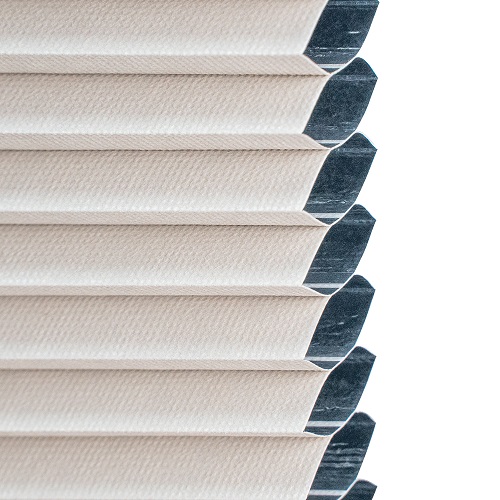
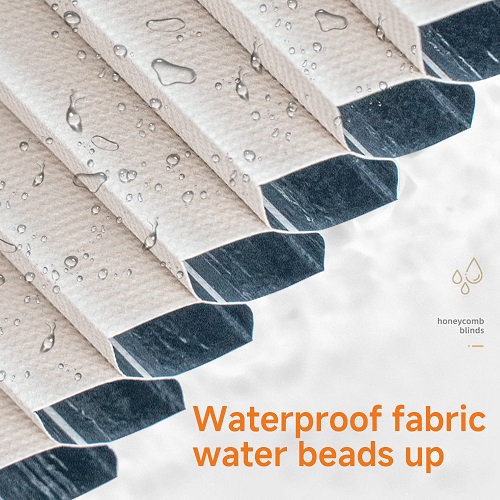
1. What Should Buyers Compare When Choosing Cellular Shades Fabric?
When comparing cellular shades fabric suppliers, buyers can evaluate the following factors:
Material composition
Fabric thickness and weight
Cell size
Aperture and cell structure
Light-filtering performance
Blackout options
Color selection
Fabric width and other specifications
Customization capability
MOQ and bulk supply capacity
OEM/ODM support
Quality consistency and production lead time
This provides a more practical comparison for businesses that need to purchase cellular shades fabric repeatedly or in large quantities.
2. Polyester-Based Cellular Shades Fabric
Polyester-based fabric is a common choice for cellular shades because it can offer a practical balance between appearance, durability, processing flexibility, and cost.
For B2B applications, polyester-based cellular shades fabric can be developed in different constructions and specifications to meet different market requirements. Buyers can select suitable fabric characteristics according to the finished shade design and application.
Potential advantages include:
Good suitability for large-scale production
Flexible color options
Suitable for different cellular shade constructions
Good balance between performance and cost
Suitable for wholesale and OEM production
For buyers developing a standard product range, this type of fabric can be a practical starting point.
3. Light-Filtering Cellular Shades Fabric
Light-filtering cellular shades fabric is designed to allow controlled natural light while reducing direct glare and improving privacy. It can be suitable for residential rooms, offices, hospitality spaces, and other applications where complete blackout is not required.
When selecting Light-Filtering Fabric, buyers should compare light transmission, fabric color, thickness, cell structure, and overall appearance.
For wholesalers and window covering brands, offering several levels of light control can make it easier to build product collections for different customer segments.
4. blackout cellular shades Fabric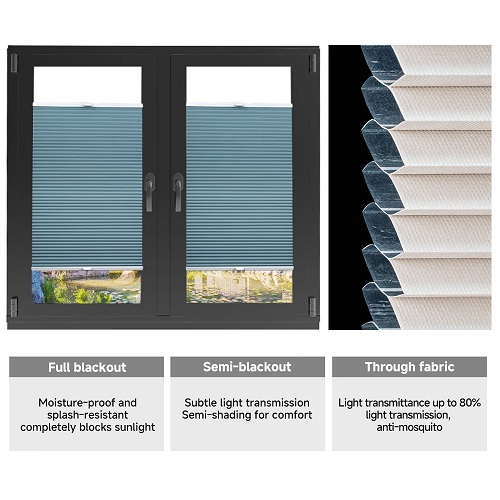
Blackout cellular shades fabric is a better choice for applications where strong light control and privacy are important.
Common applications can include:
Hotel bedrooms
Residential bedrooms
Nurseries
Conference rooms
Media rooms
Commercial spaces requiring stronger light control
Blackout requirements may involve different fabric constructions or processing methods, so buyers should confirm the required performance with the manufacturer before production.
5. Cell Size: Which Specification Should Buyers Choose?
Cell size is an important part of cellular shades fabric selection. It affects the visual appearance of the finished shade and can influence insulation performance and product construction.
| Fabric Feature | Buyer Consideration |
|---|---|
| Small Cell | Suitable when a compact and refined appearance is preferred. |
| Medium Cell | A flexible option for a wide range of window covering applications. |
| Large Cell | Can be considered for applications emphasizing insulation and a more distinctive cell appearance. |
There is no single cell size that is suitable for every market. The right specification depends on the finished product, window size, target market, and performance requirements.
6. Aperture and Cellular Structure
The aperture of cellular shades fabric refers to the opening or structural dimension within the cellular construction. It is an important specification when manufacturers develop fabrics for different finished shade designs.
Different aperture and cell structures can affect the appearance, folding characteristics, fabric consumption, and construction of the final cellular shade.
For OEM and ODM buyers, discussing aperture and cellular structure directly with the manufacturer is recommended. A supplier with production and development capabilities can evaluate the requested specification before moving to mass production.
7. Fabric Specifications for Different Markets
Different customers often need different combinations of fabric specifications. A residential window covering brand may prioritize color and appearance, while a hotel project may place greater emphasis on consistent specifications and repeat supply.
| Market | Key Fabric Requirements |
|---|---|
| Residential | Color, appearance, privacy, light control, insulation |
| Wholesale | Stable quality, competitive cost, multiple specifications, bulk supply |
| Hotels | Consistent colors, light control, repeatability, project delivery |
| Commercial | Durability, privacy, light management, specification consistency |
| Engineering Projects | Customized specifications, stable bulk production, delivery capability |
8. Custom Cellular Shades Fabric for OEM and ODM Projects
For established window covering brands and distributors, standard fabric may not always meet their product positioning. Custom cellular shades fabric allows buyers to develop products around specific market requirements.
Depending on the project, customization may include:
Fabric material and construction
Cell size
Aperture
Fabric width
Fabric thickness
Fabric weight
Color matching
Light-filtering or blackout performance
Packaging and labeling
OEM and ODM support is particularly useful for brands that want to develop exclusive window covering collections or for project buyers who need fabrics that match a specific interior design.
9. What Makes a Good Cellular Shades Fabric Supplier?
For B2B buyers, the best supplier is not necessarily the one offering the lowest initial quotation. A reliable supplier should be able to maintain stable specifications and quality throughout the entire purchasing cycle.
Important supplier capabilities include:
In-house manufacturing capability
Stable raw material sourcing
Consistent fabric specifications
Color matching capability
Sample development
OEM and ODM support
Bulk production capacity
Quality inspection procedures
Reliable delivery schedules
Long-term support for repeat orders
These factors are especially important for hotel groups, commercial projects, window covering brands, and wholesalers that need to reorder the same fabric over a long period.
10. Why Choose Us as Your Cellular Shades Fabric Manufacturer?
As a professional cellular shades fabric manufacturer and supplier, we focus on providing B2B customers with stable fabric quality, flexible customization, and reliable production support.
We work with different types of customers, including window covering manufacturers, wholesalers, distributors, brands, hotel suppliers, contractors, and engineering project buyers.
Our factory-based production model allows us to support both standard fabric orders and customized OEM/ODM requirements. Instead of offering only finished products, we can work with buyers on fabric specifications, cell structure, aperture, color, and other requirements during the product development stage.
For bulk buyers, stable production and repeat-order consistency are also important. We can coordinate production according to order quantities and project requirements, helping customers maintain a consistent product supply across different batches.
11. How to Select Cellular Shades Fabric for Your Market?
The right fabric depends on your target market and finished product requirements. Before placing an order, we recommend considering the following questions:
What type of customers will use the finished cellular shades?
Is light filtering or blackout performance required?
What cell size and aperture are suitable for the product?
What fabric material and construction are required?
Do you need standard colors or custom color matching?
What fabric width and other specifications are required?
What is the expected order quantity?
Do you require OEM or ODM development?
Will the fabric be used for a hotel or engineering project?
Can the supplier maintain consistent quality for repeat orders?
Answering these questions before requesting a quotation can make supplier comparison much more efficient.
Conclusion
There is no universal “best” cellular shades fabric for every market. The ideal choice depends on material, cell size, aperture, fabric specifications, light control, customization requirements, target customers, and purchasing volume.
For wholesalers and window covering brands, a flexible fabric supplier can help develop different product ranges for different market segments. For hotels and engineering projects, stable bulk production, consistent specifications, and reliable delivery are equally important.
If you are looking for a cellular shades fabric supplier or manufacturer for wholesale, OEM/ODM, hotel, commercial, or engineering projects, send us your required specifications and application details. Our team can help you evaluate a suitable fabric solution.