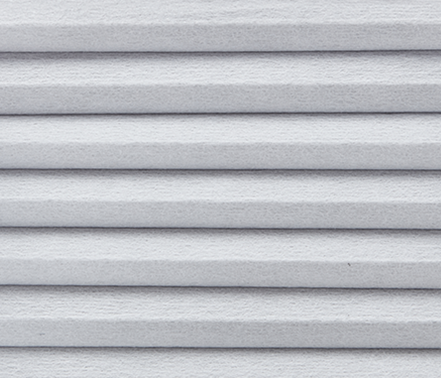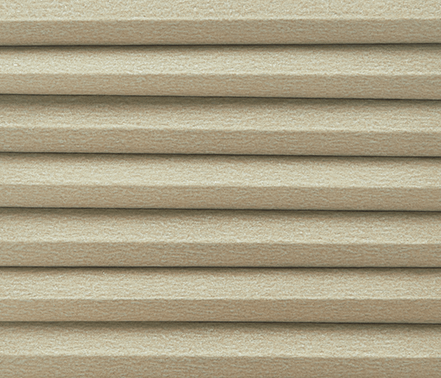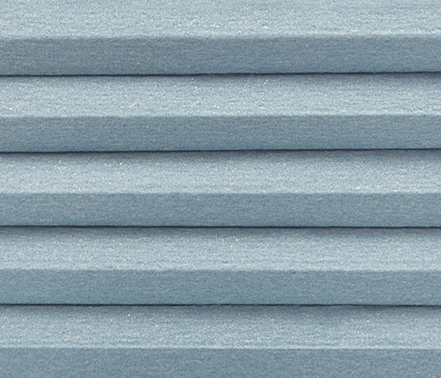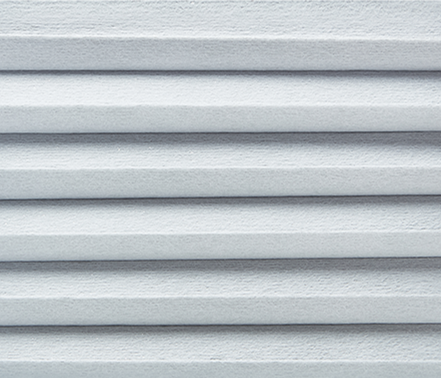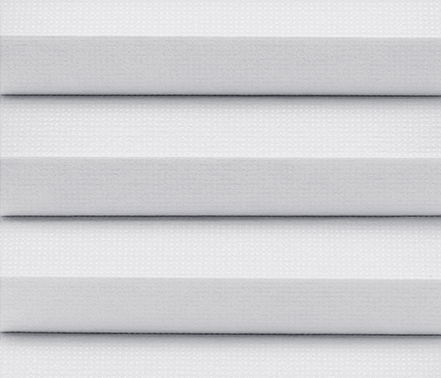
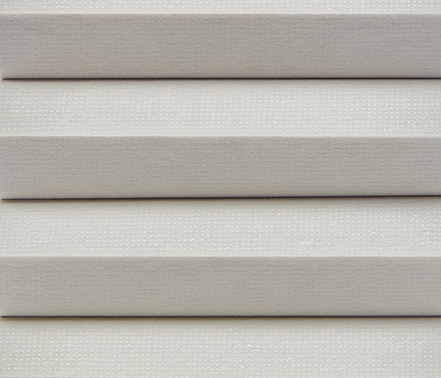
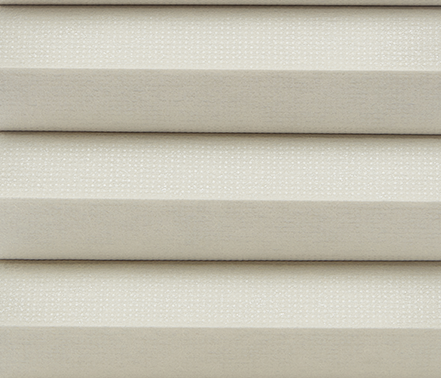
Looking for a woven honeycomb fabric with stronger insulation than our compact sizes? Our 38mm woven honeycomb blind fabric is available in single cell, cell-in-cell (double cell), side-by-side double cell, and pleated structures, using a tightly woven polyester construction rather than spunlace non-woven fibers. The larger 38mm cell traps more still air than our 16-25mm range while keeping the decorative woven texture buyers choose this material for. Below you'll find full specifications, structural comparisons, application guidance, and answers to the questions buyers ask most.
| Item | Specification |
|---|---|
| Material | Woven polyester fabric (not non-woven) |
| Cell Size | 38mm (also available in 16mm, 20mm, 25mm, 45mm on request) |
| Structure Types | Single Cell, Cell-in-Cell (Double Cell), Side-by-Side Double Cell, Pleated (Accordion) |
| Light Control | Semi-blackout / Light-filtering sheer (blackout available with backing option) |
| Width Range | Custom cut, up to 3000mm (site-dependent) |
| Height Range | Custom cut, up to 3000mm (site-dependent) |
| Fire Rating | Available to EN 13501-1 / ASTM E 648 / GB 8624 |
| Colorfastness | Grade 4+ under international standard (ISO 105 / AATCC 16 / GB/T 8427) |
| Environmental Compliance | OEKO-TEX 100 / CPSIA / GB 31701 available |
| Operation Systems | Cordless, top-down bottom-up, day & night dual fabric, motorized |
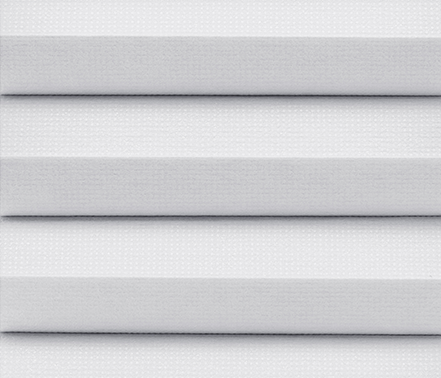
Woven honeycomb fabric is made by weaving polyester yarn into a defined pattern, giving it a more textured, fabric-like appearance compared to spunlace non-woven material. At 38mm, this texture is paired with a larger air pocket for stronger thermal performance.
Fabric texture and appearance: The visible weave pattern gives a more premium, textile-like look than the flatter surface of non-woven fabric, often preferred for decorative or higher-end interiors.
Stronger insulation at 38mm: The larger cell holds more still air than our 16-25mm woven range, reducing heat transfer through the window more effectively.
Light control & privacy: Semi-blackout and light-filtering options soften incoming light while maintaining privacy; blackout performance can be added with a backing layer if full light-block is required.
Noise reduction: The larger hollow cells absorb more sound than smaller woven sizes, useful for street-facing rooms.
Crease memory: Heat-setting during manufacturing locks the woven fabric's folds in place, keeping pleats sharp and even through repeated raise-lower cycles.
Different honeycomb structures are suited to different performance priorities. Buyers sourcing for specific climates or price points should match the structure to the end use.
| Structure | Description | Best For |
|---|---|---|
| Single Cell | One row of hexagonal cells; slim profile, lower cost | Standard residential windows, budget-conscious projects |
| Cell-in-Cell (Double Cell) | A smaller cell nested inside a larger cell, doubling the insulating air pockets | Climates with high heating/cooling demand, premium residential |
| Side-by-Side Double Cell | Two cells placed adjacently rather than nested, adding rigidity and depth | Larger windows needing extra structural stability |
| Pleated | Simple accordion fold without a hollow cell; flatter, more compact stack | Skylights, shaped windows, compact headrail installations |
Not sure which structure suits your installation? Send us your window dimensions and target light control level, and we'll recommend a configuration and follow up with fabric samples within 24 hours.
Woven fabric quality depends on different factors than non-woven material. Four areas separate premium woven fabric from fabric that loosens, frays, or fades quickly:
Weave density and uniformity: Premium fabric has a tight, even weave with no visible gaps or thin spots when held up to light. Loosely woven fabric stretches out of shape over time.
Crease consistency: Precise heat-setting keeps folds sharp and evenly spaced through tens of thousands of raise-lower cycles, especially important at the larger 38mm fold depth. Lower-grade fabric loses its crease and the pleats go uneven.
Yarn dye consistency: Evenly dyed yarn avoids visible streaking or color variation across the panel width, especially noticeable on wider 38mm panels.
Edge finishing: Cut edges should be sealed cleanly with no fraying or loose threads, which is a more common failure point on woven fabric than on non-woven material.
We test and certify woven honeycomb fabric against the major international benchmarks so buyers can match documentation to their target market's regulatory requirements.
| Test Type | EU Standard | US Standard | China Standard |
|---|---|---|---|
| Tensile Strength | ISO 13934 | ASTM D5034 | GB/T 3923 |
| Colorfastness | ISO 105 | AATCC 16 | GB/T 8427 |
| Flame Retardancy | EN 13501-1 | ASTM E 648 | GB 8624 |
| Environmental / Chemical Safety | OEKO-TEX 100 | CPSIA | GB 31701 |
Residential windows: Bedrooms and living rooms benefit from semi-blackout cell-in-cell woven fabric for energy savings with a decorative textured look.
Offices and commercial interiors: Light-filtering single cell or side-by-side woven fabric reduces glare on screens while adding a textile finish to the interior.
Hospitality (hotels, serviced apartments): Woven fabric with strong crease memory withstands frequent guest operation while giving rooms a more premium look than non-woven material.
Decorative and design-led interiors: The visible weave texture suits projects where the shade fabric is part of the room's design, not just a functional cover.
Skylights and shaped windows: Pleated structure's flatter stack height suits angled or irregular window frames where a bulkier cellular structure won't retract cleanly.
Need fabric samples for a specific project? Tell us your target market, cell size preference, and whether you need semi-blackout or light-filtering fabric, and we'll send technical datasheets and physical swatches within 24 hours.
The width of each hexagonal cell when fully closed. Larger cells insulate slightly better, while smaller cells stack more compactly when raised.
Woven fabric has a visible textile-like weave pattern; non-woven has a flatter surface and is more commonly used for foil-backed blackout.
Cell-in-cell insulates slightly better with its nested air pockets. Side-by-side offers more structural rigidity for larger windows, with similar insulation performance.
Standard fabric is semi-blackout or light-filtering. Full blackout is possible with an added backing layer — let us know if you need it.
Have a specific project spec in mind? Message us your cell size, structure preference, and target fire/environmental standard, and we'll follow up with a quote and sample fabric within 24 hours.



 English