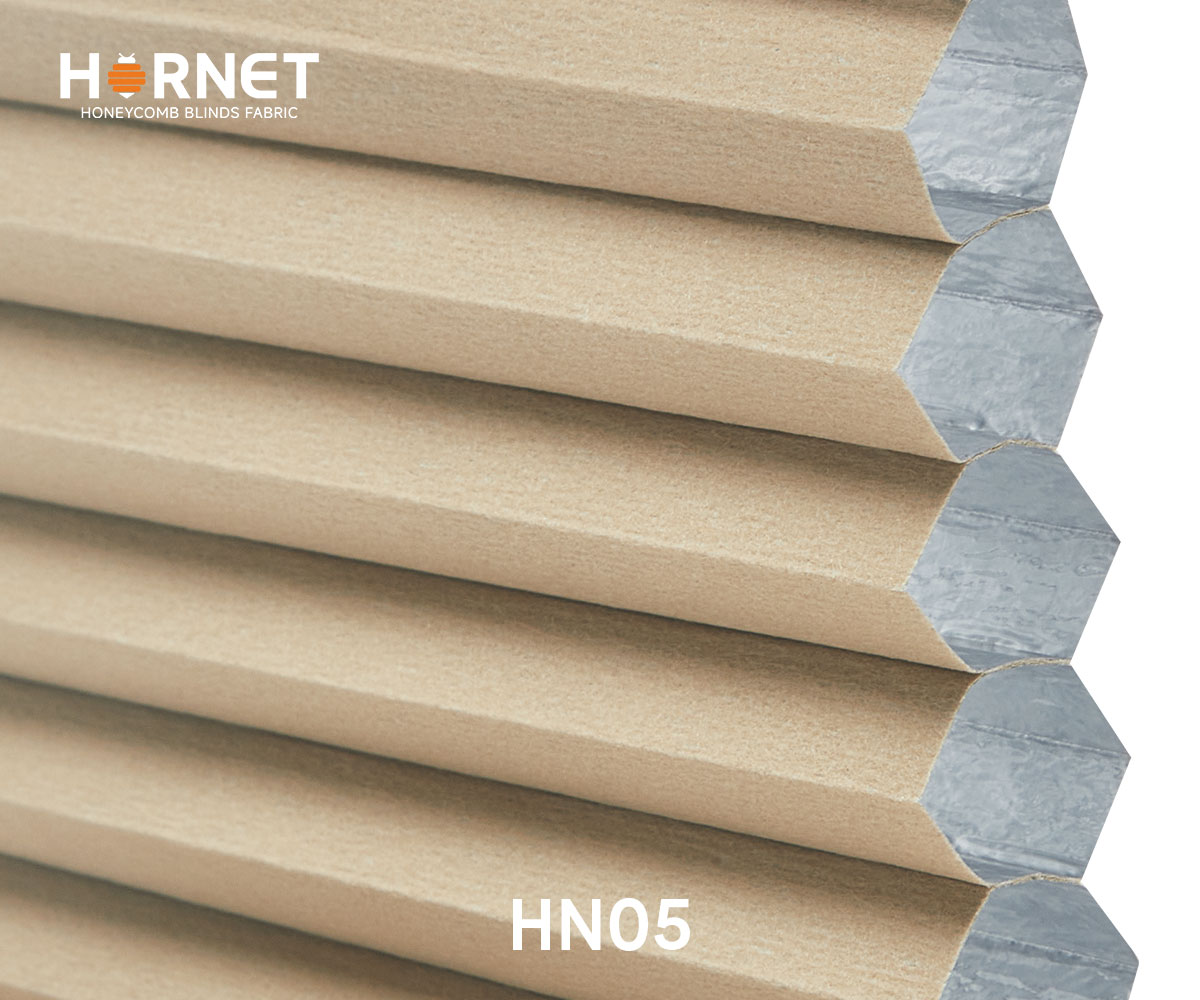
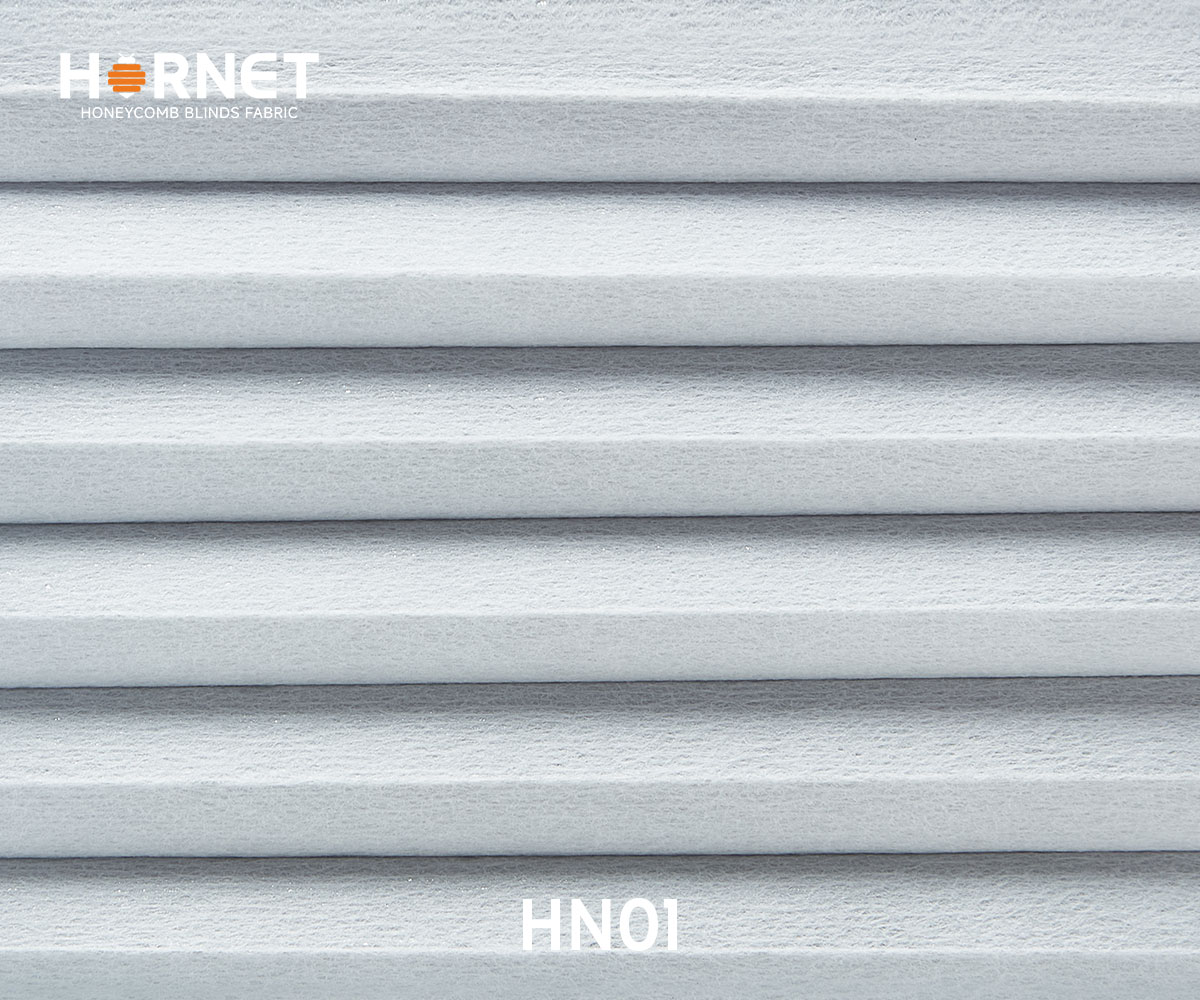
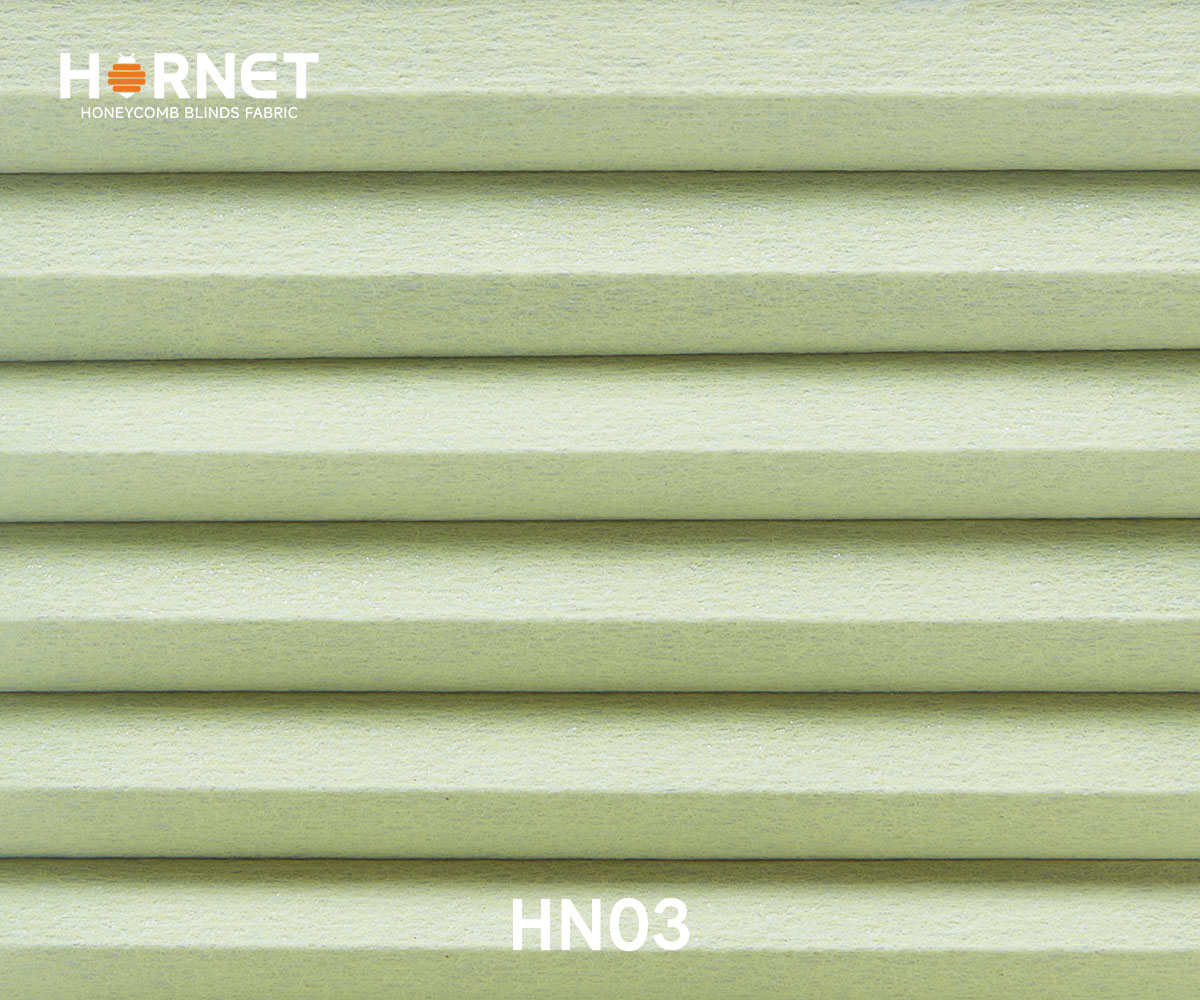
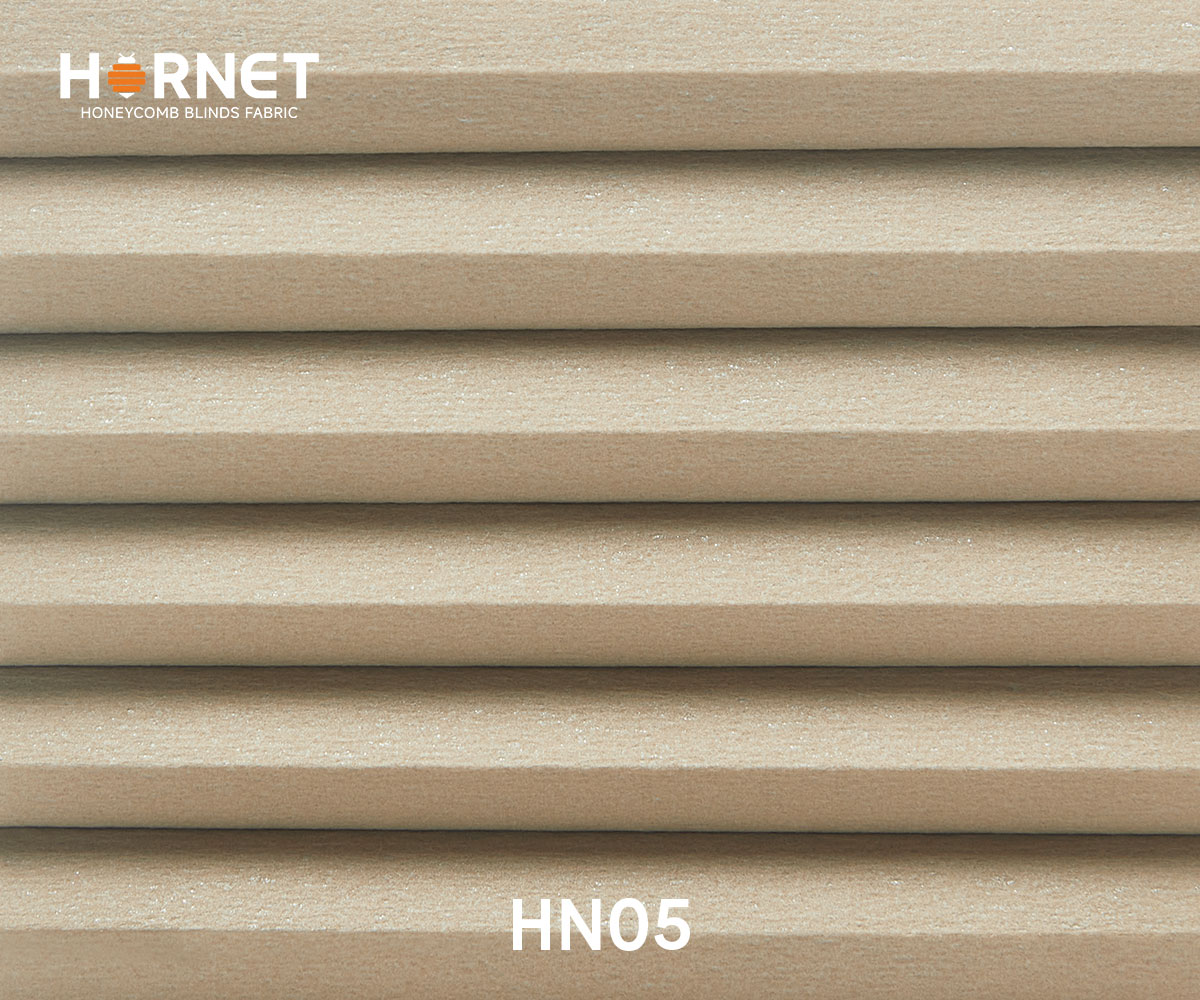
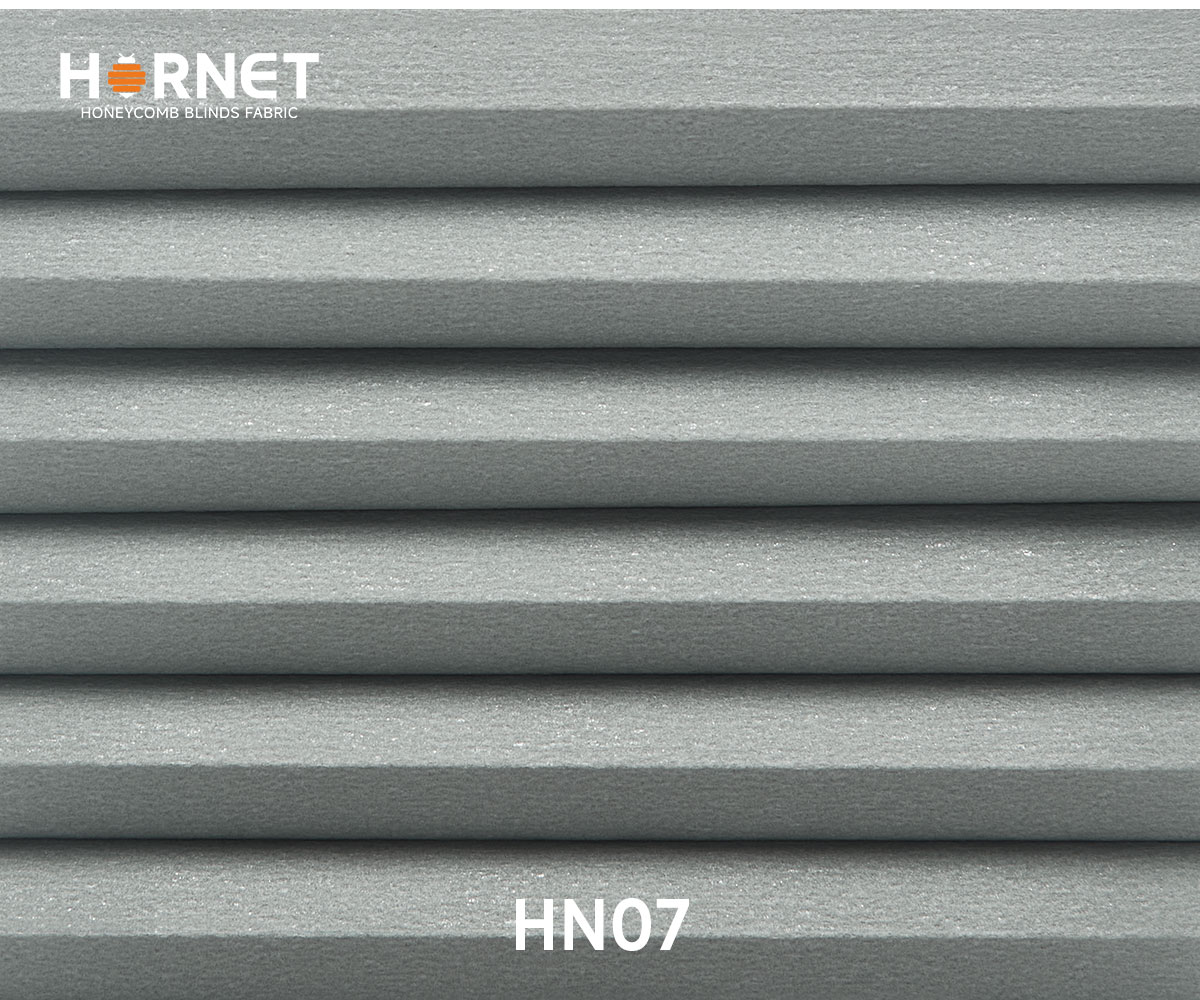
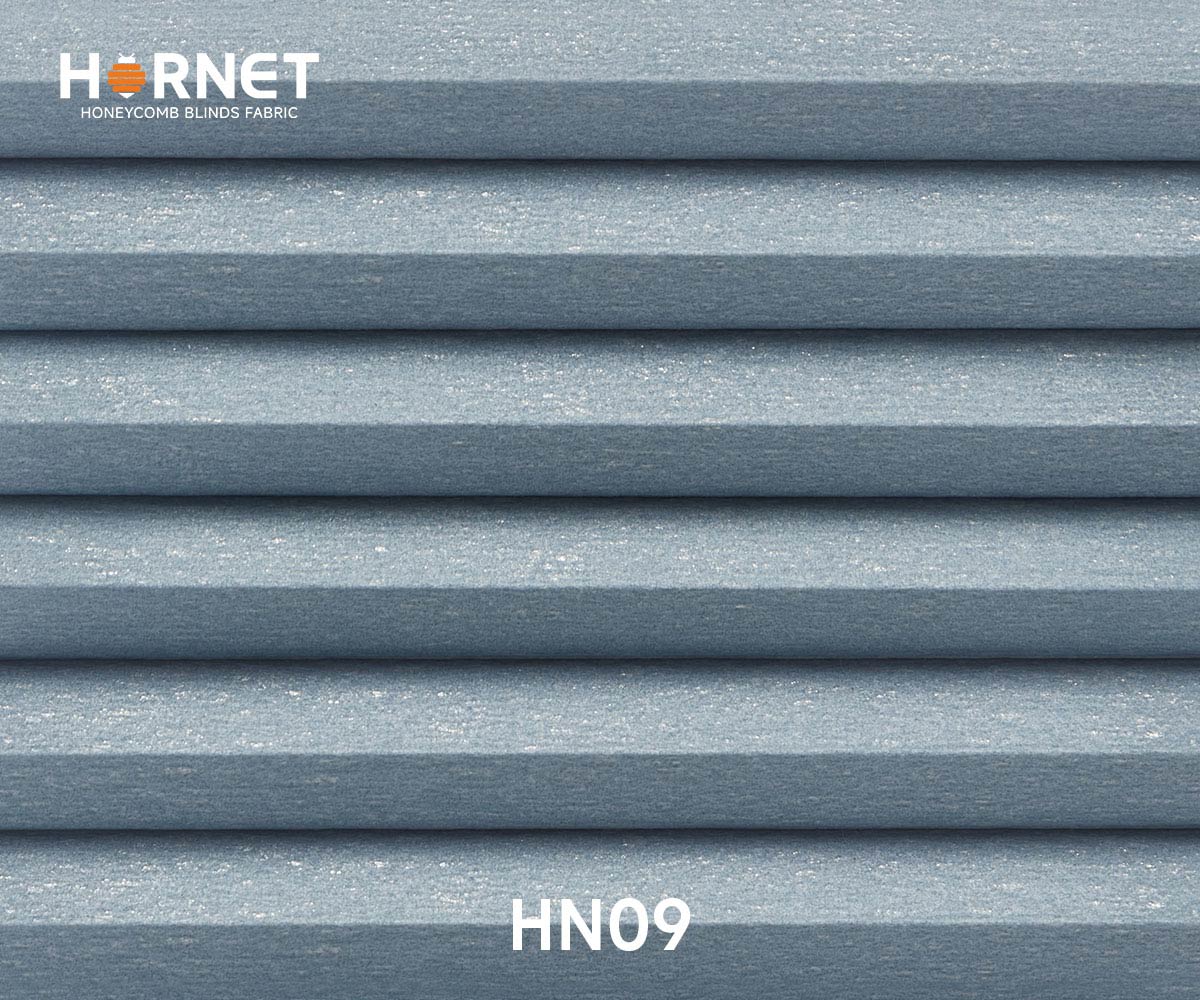
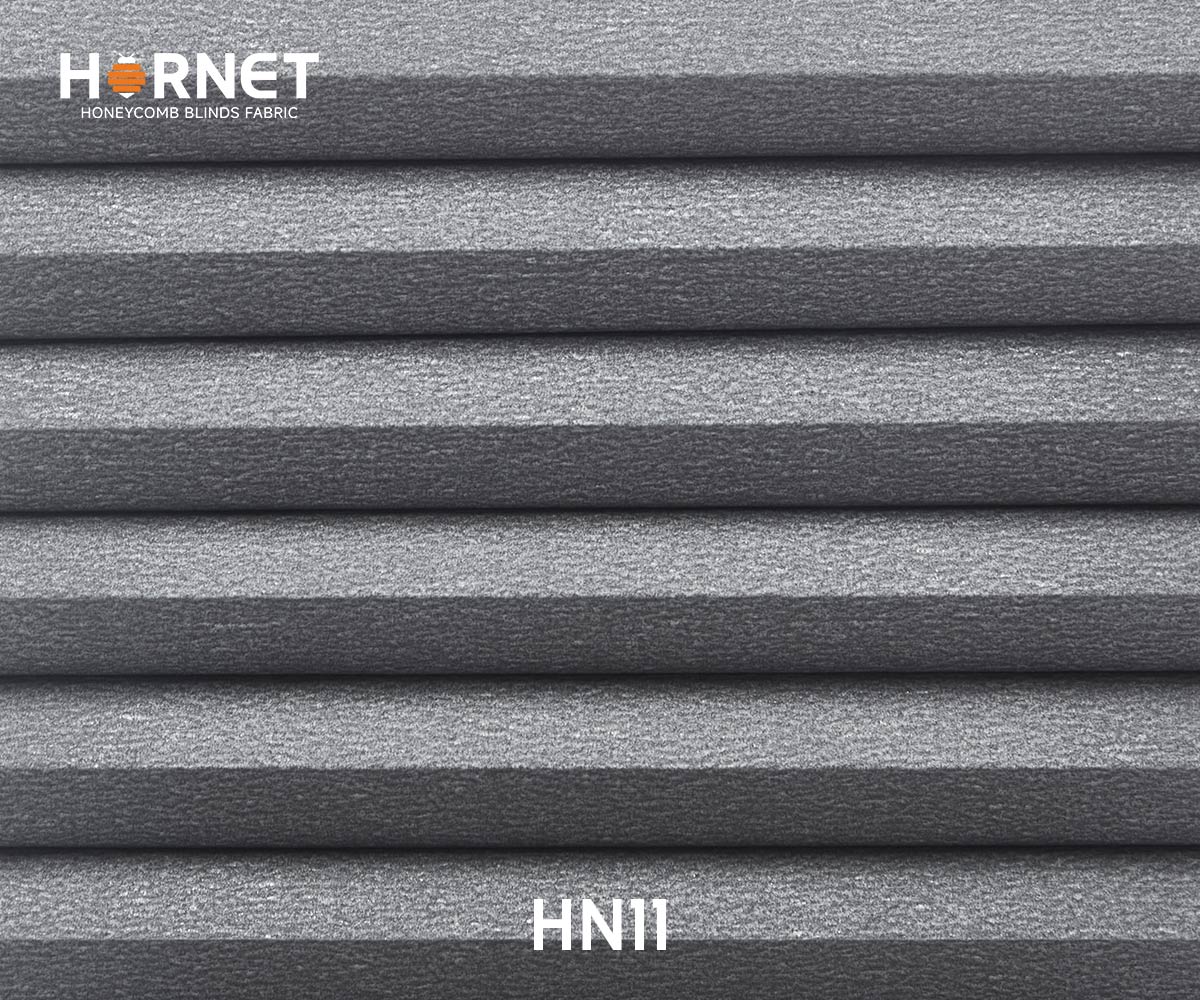
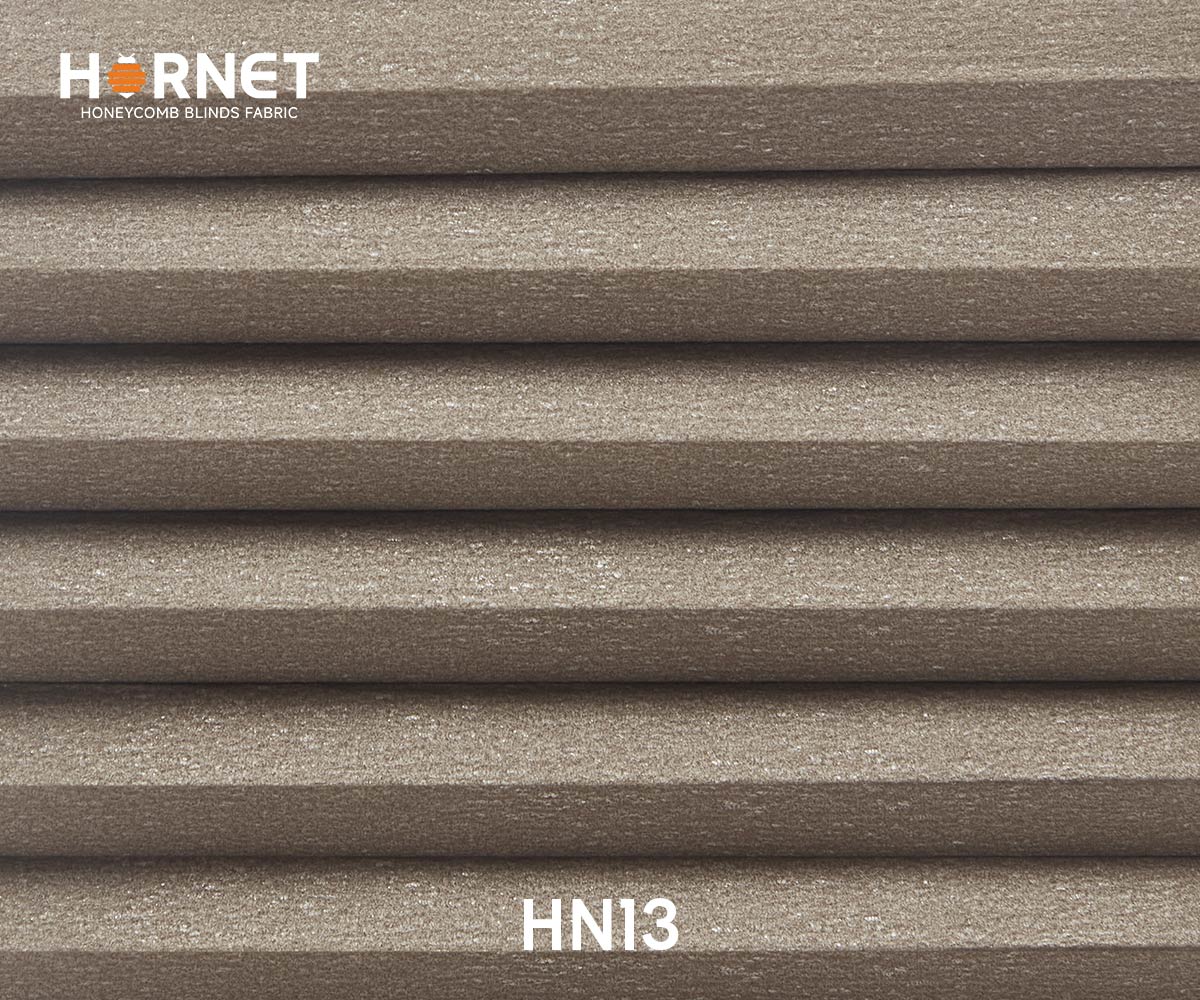
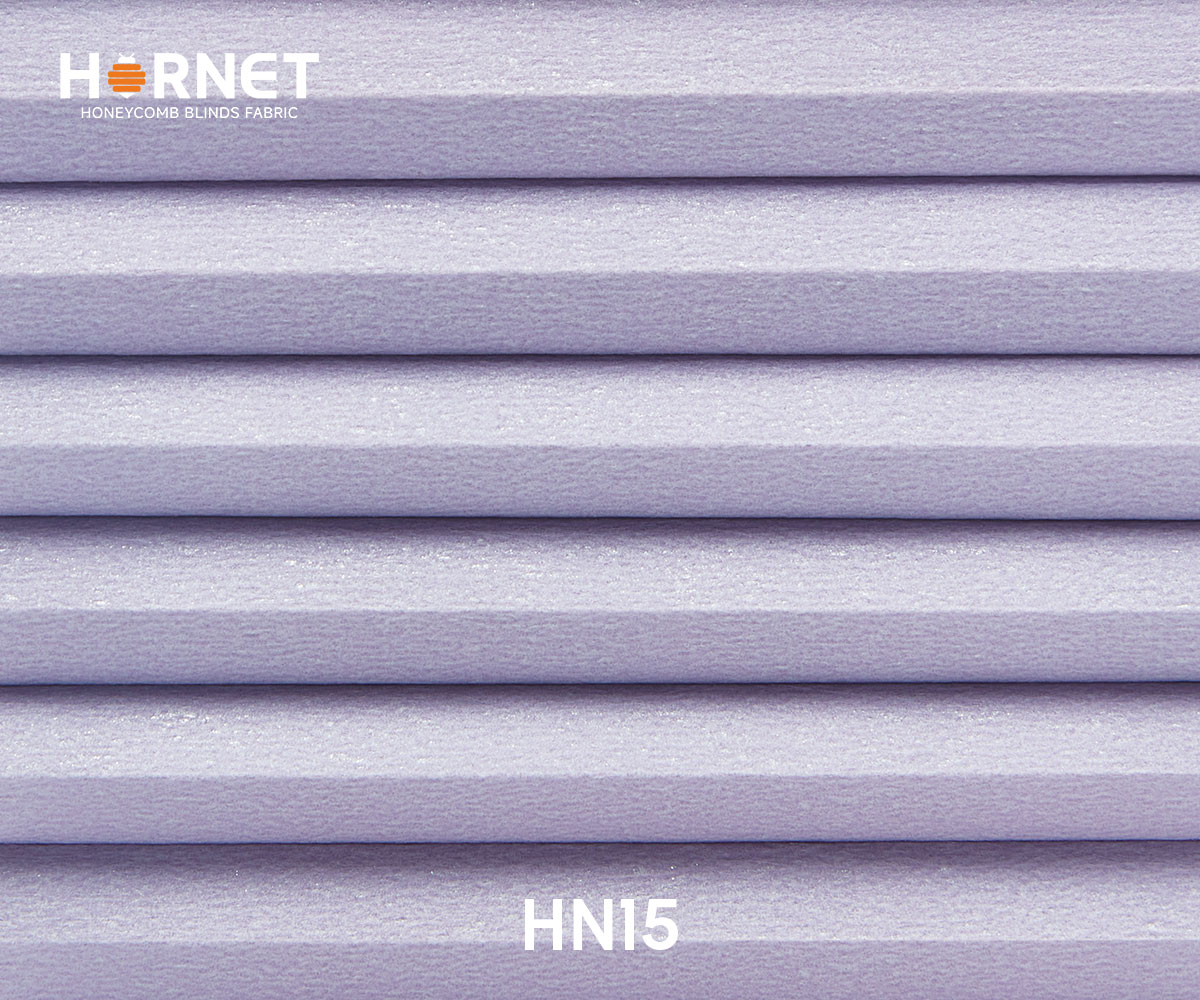
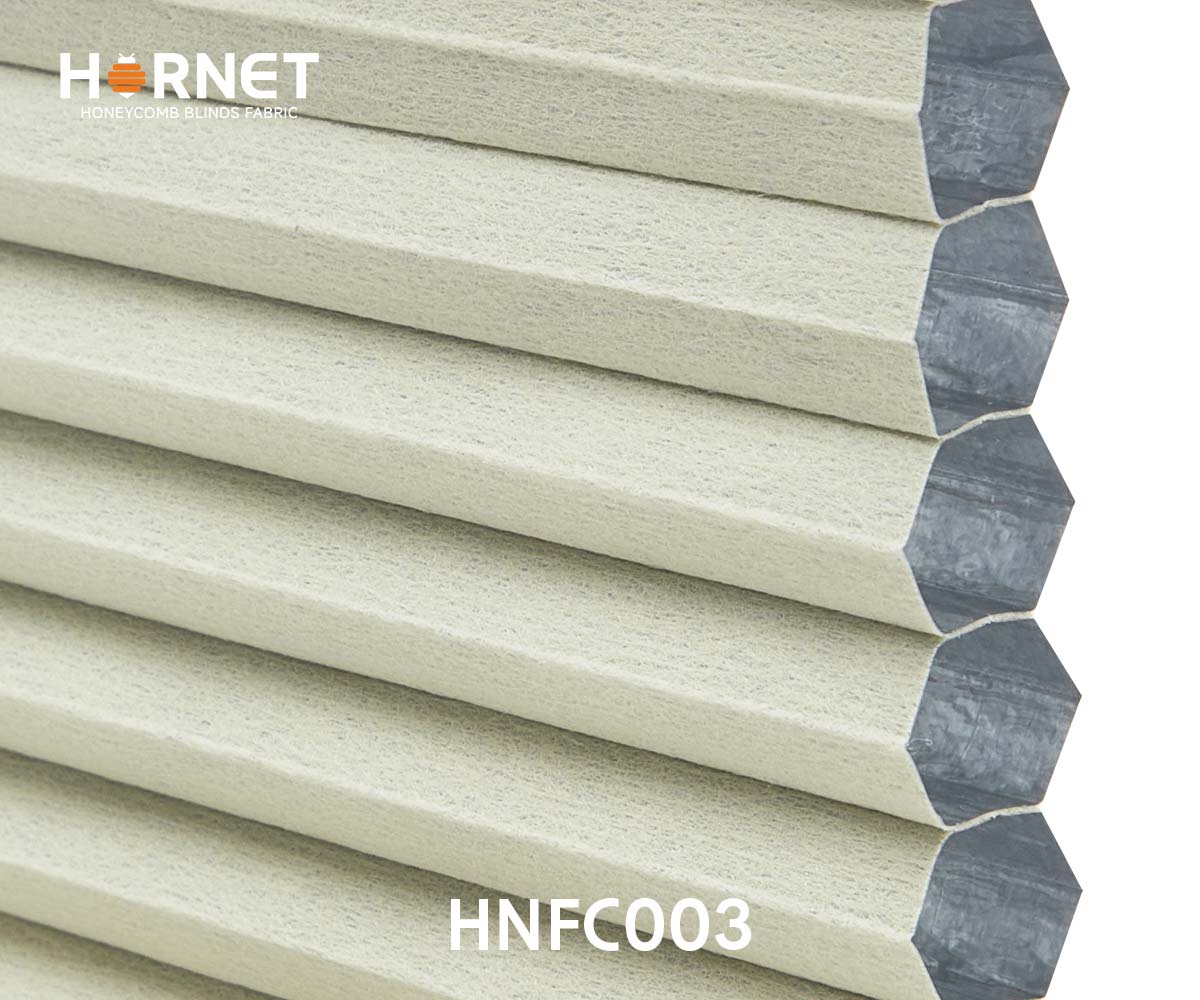
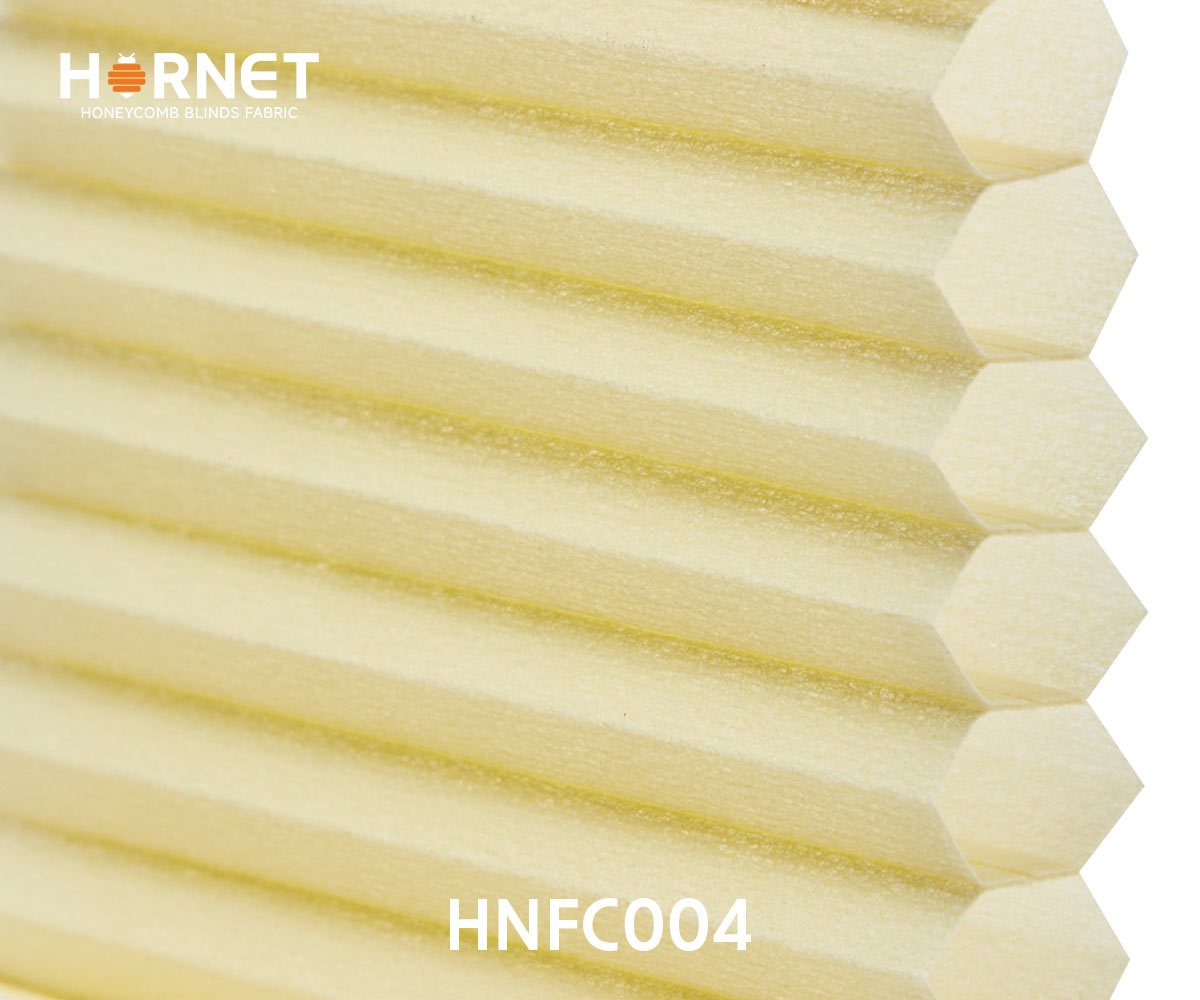
With a 20mm cell profile, this blackout nonwoven honeycomb blind fabric gives the lowered shade a defined horizontal pattern and a plain room-facing surface. Its opaque construction blocks light passing through the material, making it suitable for cellular shades used in bedrooms, guest rooms and presentation spaces. The pleat faces are broader than those of the 16mm range, so the selected color occupies more visible space between fold lines. HORNET offers sample-book colors and custom color development for brands building coordinated blackout ranges, with wholesale and OEM/ODM supply available.
Blackout Performance through the Material
This 20mm blackout cellular shade fabric supplies the opaque material used in the finished blind. It covers the window with a nonwoven fabric face rather than allowing daylight through the fabric. This makes it a distinct option from the 20mm light-filtering range for rooms where reduced daylight is the priority.
20mm Pleats with a More Noticeable Profile
The 20mm size gives the shade a broader cell profile than the finer 16mm option. Fold lines and pleat faces become part of the room-facing design, adding depth to a plain fabric surface. The style is defined by the cellular form and color rather than a printed pattern.
Colors for Coordinated Blackout Ranges
Sample-book colors and custom color development let brands build blackout collections around their room palettes. The opaque construction means a light-blocking product can still have a decorative room-facing color. Packaging customization is also available for OEM and ODM supply programs.
Request 20mm Blackout Fabric Samples
Contact HORNET for honeycomb shade fabric samples and OEM or wholesale purchasing inquiries.
1. A Dedicated Light-Blocking Option
The fabric supplies an opaque construction for collections designed around daylight reduction. Manufacturers can offer it alongside 20mm light-filtering fabric as a separate product with a different light-control purpose.
2. A Broader Decorative Fold
The 20mm pleat scale gives a plain nonwoven fabric a visible cellular form. It suits window treatments where the folds should contribute to the interior design, rather than remain a very fine background texture.
3. An Opaque Surface for Privacy-Focused Rooms
The fabric prevents a view through the material itself. This opaque face can be used in shade designs for bedrooms and guest accommodation where a non-view-through window covering is part of the brief.
Main Bedrooms and Guest Bedrooms
The 20mm profile adds a noticeable pleated texture to bedroom windows. Its blackout construction supplies the light-blocking fabric for schemes built around sleep-space use and coordinated bedding colors.
Hospitality Room Collections
The range can be used in hotel and serviced-accommodation shade collections. Custom colors and a repeated 20mm cellular profile allow the window treatment to form part of a consistent room-design language.
Meeting and Presentation Rooms
Blackout fabric can be used in cellular blinds intended to reduce daylight during presentations or screen viewing. The plain nonwoven face and visible pleats also fit rooms that return to everyday meeting use between presentations.
How does 20mm blackout fabric differ from the 16mm blackout option?
The cell size changes the visual proportion of the folds. The 20mm profile is broader, while 16mm presents finer detail. Both are blackout fabric categories; the size difference alone does not establish better light blocking.
Does a larger cell size mean a wider finished blind?
Cell size describes the fabric's cellular profile. Finished blind dimensions depend on the specified fabric and the complete operating system, so the 20mm name is not a maximum-width rating.
Can daylight still enter around a blackout shade?
Yes. Blackout fabric blocks light through the material, while light can enter around the edges of a finished shade. Edge coverage and mounting are part of the complete window-covering design.
Are matching light-filtering fabrics available for other rooms?
The 20mm collection includes a separate light-filtering nonwoven range. Brands can develop coordinated room palettes across the two light-control types, while allowing for differences in construction and transmitted light.



 English